Moving across the country is a lot of work even before you decide what to do with the car. Driving it can make sense if you have the time and a route you want to take. Many relocators would rather put those miles on a transport trailer and fly, or travel with the household goods, so the car is waiting at the new address.
Our team at Auto Shipping Near Me helps customers connect with reputable carriers who care for the cargo. We contact carriers directly from our own company contact list, built since 2007 and updated daily. We have offices in Fort Lauderdale, our headquarters, and in Orlando, and we work with licensed carriers on routes across the lower 48.
Time the shipment around the rest of the move
Plan the shipment as part of the move, not as an afterthought. Think about when you need the car at the new address, when you have to leave the old one, and who can be present at each end.
Flexible dates usually give you more options. A one-day window can be harder to fill in a busy season, because the truck is already lining up other vehicles along the route. A range of dates gives the carrier more room to fit your car onto a trailer heading that way.
Decide early who will meet the driver. Have someone 18 or older, with a valid ID, at pickup and again at delivery, or a trusted person at each address. Apartment complexes, gated communities, and tight downtown streets can be difficult for a car carrier, so confirm access or agree on a nearby meeting point ahead of time. Share gate codes and any access limits, such as low trees, steep driveways, or a building that does not allow large trucks. If you are flying in, try not to schedule delivery for the same hour you land.
Open or enclosed transport
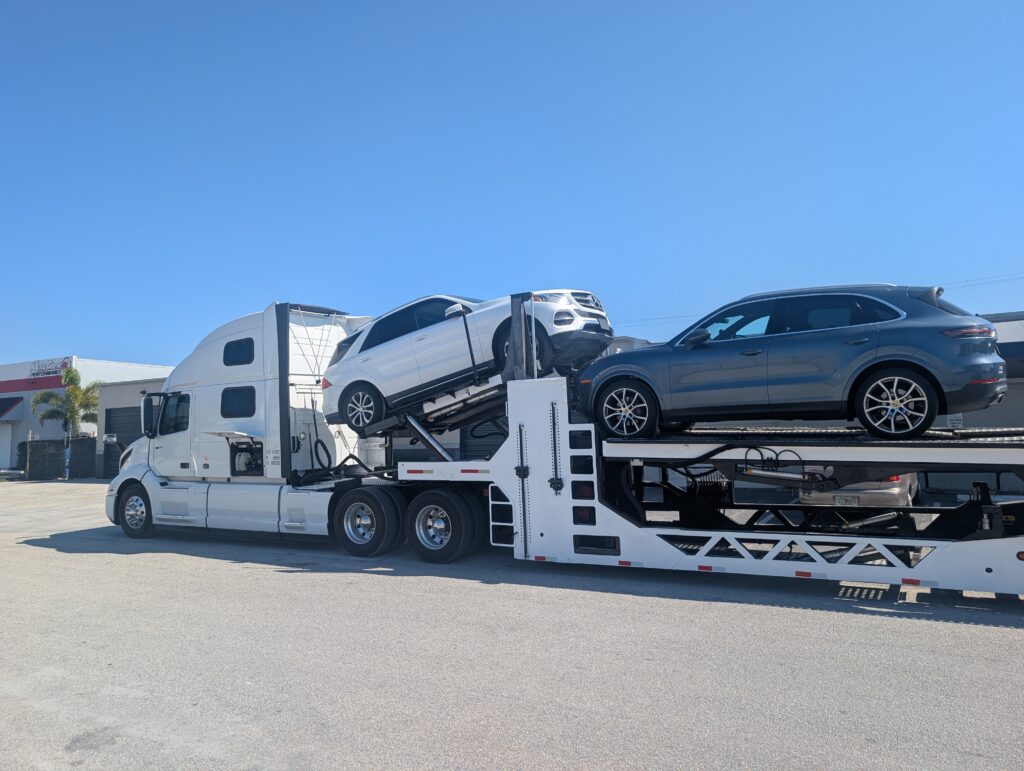
Most daily drivers travel on an open carrier, the standard multi-level trailer you see on the highway. The car is exposed to weather, as it would be in a driveway. For a regular sedan, SUV, or pickup that runs and steers, this is the option most relocators use.
Enclosed transport puts the vehicle inside a covered trailer. People often choose it for a classic or high-value car, or for extra protection on a long trip. It is not required for a typical family car, and it is not always available on every lane or date, so ask early if it matters to you.
If the car does not run, say so when you request the quote. A non-running vehicle has to be winched or otherwise assisted onto the trailer, and not every truck is set up for that. On moves out of the Florida Keys, In-N-Out Keys LLC (USDOT 4120018, MC-1583555) handles the shipments. For a non-running vehicle leaving the Keys, open transport is usually the practical choice.
How we connect you with a carrier
Once you know the origin, destination, date range, and the kind of transport you want, start with a free quote. Tell us the year, make, and model, whether the car runs, and any tight timing around your move. We contact carriers directly from our own company contact list, built since 2007 and updated daily, and we look for reputable carriers who care for the cargo and already run your route when we can. You will know who is moving your car. Pickup and delivery are then scheduled with you, and you meet the driver at both ends.
Prepare the car before pickup
A little prep makes pickup smoother and gives you a clear record of the car’s condition.
- Photograph all four sides, the corners, the roof if you can, the interior, and the odometer, in good light, before the carrier arrives. Keep the pictures.
- Note existing chips, scratches, dents, and windshield marks before the car is loaded.
- Remove personal items. Carriers typically transport the vehicle, not household goods. Take out luggage and loose belongings, and remove toll tags or parking passes that could be charged on the road.
- Leave about a quarter tank of fuel, usually enough for loading and unloading without adding extra weight.
- Disable or silence the alarm, and have a working key ready. If the car has a unique start procedure, write it down for the driver.
- Wash the car if you can. Existing marks show up better on a clean vehicle.
If the car has aftermarket parts, a low air dam, or a parking brake that sticks, mention that before pickup.
Pickup, the Bill of Lading, and delivery
At pickup, you and the driver look over the vehicle together. The condition is recorded on the Bill of Lading, the inspection report that travels with the shipment. Walk the car slowly, compare it with your photos, and make sure existing damage is noted before you sign. Keep a copy.
Do the same inspection at delivery, in good light, before you sign. If you see new damage, note it on the Bill of Lading before signing. That record is what a cargo claim starts from, and it is much harder to add after the driver has left.
Stay reachable. Drivers work around traffic, rest requirements, and the other vehicles on the trailer, so windows can shift. Keep your phone on, and leave a backup contact.
Coast-to-coast shipments often take about one to two weeks, depending on the route, the time of year, weather, and how the rest of the trailer is loaded. That is a general range, not a promise. Your carrier will confirm timing for your dates and lane.
Ready when you are
If you are relocating and want to ship the car, our team is here to help. We will connect you with a reputable carrier for your route.
Get a free quote, call (754) 946-4922, or email hello@autoshippingnearme.com.